
Comprehensive comparison framework for optimal specialized ocean freight selection based on cargo characteristics and operational requirements

Why Method Selection Matters
Break bulk and Roll-on/Roll-off (RoRo) shipping represent the two primary ocean freight methods for specialized cargo that cannot be containerized—oversized equipment, heavy machinery, vehicles, project cargo, and industrial components. For Vietnamese exporters, importers, and project managers moving specialized cargo internationally, understanding the differences between these methods is essential for optimizing costs, ensuring safety, and managing timelines effectively.
Cost differences between break bulk and RoRo can vary 30-100% or more for the same cargo, depending on cargo type, route, and specific circumstances. Each method has different cost structures—some costs are upfront while others emerge at destination—affecting total landed cost. Correct method selection can save tens to hundreds of thousands of dollars per shipment.
The methods also have distinct cargo safety profiles. Different handling procedures create different damage risk profiles. Break bulk deck cargo experiences more weather exposure compared to RoRo cargo protected inside vessels. Securing methods differ significantly—lashing versus wheels and tracks—affecting cargo safety during the voyage.
Operational efficiency varies substantially. RoRo loading and discharge typically takes hours compared to days for break bulk, reducing port time and shortening project timelines. Equipment requirements differ—break bulk requires heavy lift cranes while RoRo needs ramps and tugs, and port capabilities vary accordingly. The methods offer different scheduling flexibility and port options.
In Vietnam’s context, major ports including Ho Chi Minh City, Haiphong, Da Nang, and Nghi Son have both break bulk and RoRo capabilities. Vietnam imports significant volumes of heavy machinery, construction equipment, and vehicles where both methods are relevant. Export cargo includes vehicles such as buses and specialized vehicles, plus industrial equipment suitable for both RoRo and break bulk. Rapid infrastructure development is driving break bulk demand for construction and energy project cargo.
Understanding Break Bulk Shipping
What is Break Bulk?
Break bulk shipping involves cargo shipped as individual pieces rather than in containers or vehicles. Each piece is lifted on and off the vessel using the ship’s cranes or shore cranes, then stowed on the vessel’s deck or in cargo holds. This method requires specialized handling, securing procedures, and sea-fastening engineering.
Break bulk vessels include multi-purpose vessels equipped with cranes typically ranging from 30-300 tonnes capacity per crane. “Geared” vessels have their own cranes versus “gearless” vessels requiring shore cranes. Heavy lift vessels feature specialized cranes from 300-1,000+ tonnes for extremely heavy cargo. Semi-submersible vessels handle extreme heavy lift by submerging, floating cargo onto the deck, then surfacing to lift the cargo clear of water.
Loading and Discharge Process
The break bulk loading process begins with cargo delivery to the port and staging in a laydown area. When the break bulk vessel arrives and berths, ship’s cranes or shore cranes are positioned. Each piece is lifted individually after being rigged with slings, shackles, and spreader beams. Cargo is then lowered into holds or onto deck and positioned precisely. Critical sea-fastening follows—cargo is secured using chains, wire rope, blocking with timber supports, or temporary welding to deck. This process repeats for all pieces and can take days for multiple or large items.
Sea-fastening is engineered by marine engineers to withstand ship motions and accelerations during rough seas. Methods include lashing with chains or wire rope, blocking with timber supports, and welding temporarily to the deck. Proper sea-fastening is essential to prevent cargo shifting and damage during the voyage.
At the destination port, the vessel arrives and sea-fastening is removed. Each piece is lifted off the vessel by cranes, landed in the port laydown area or directly onto transport trucks and trailers, cleared through customs, then transported to the final destination. Loading typically takes 1-5 days depending on the number of pieces and complexity, with discharge taking a similar 1-5 days. Total port time at each end ranges from 2-10 days including loading/discharge, vessel waiting time, and customs procedures.
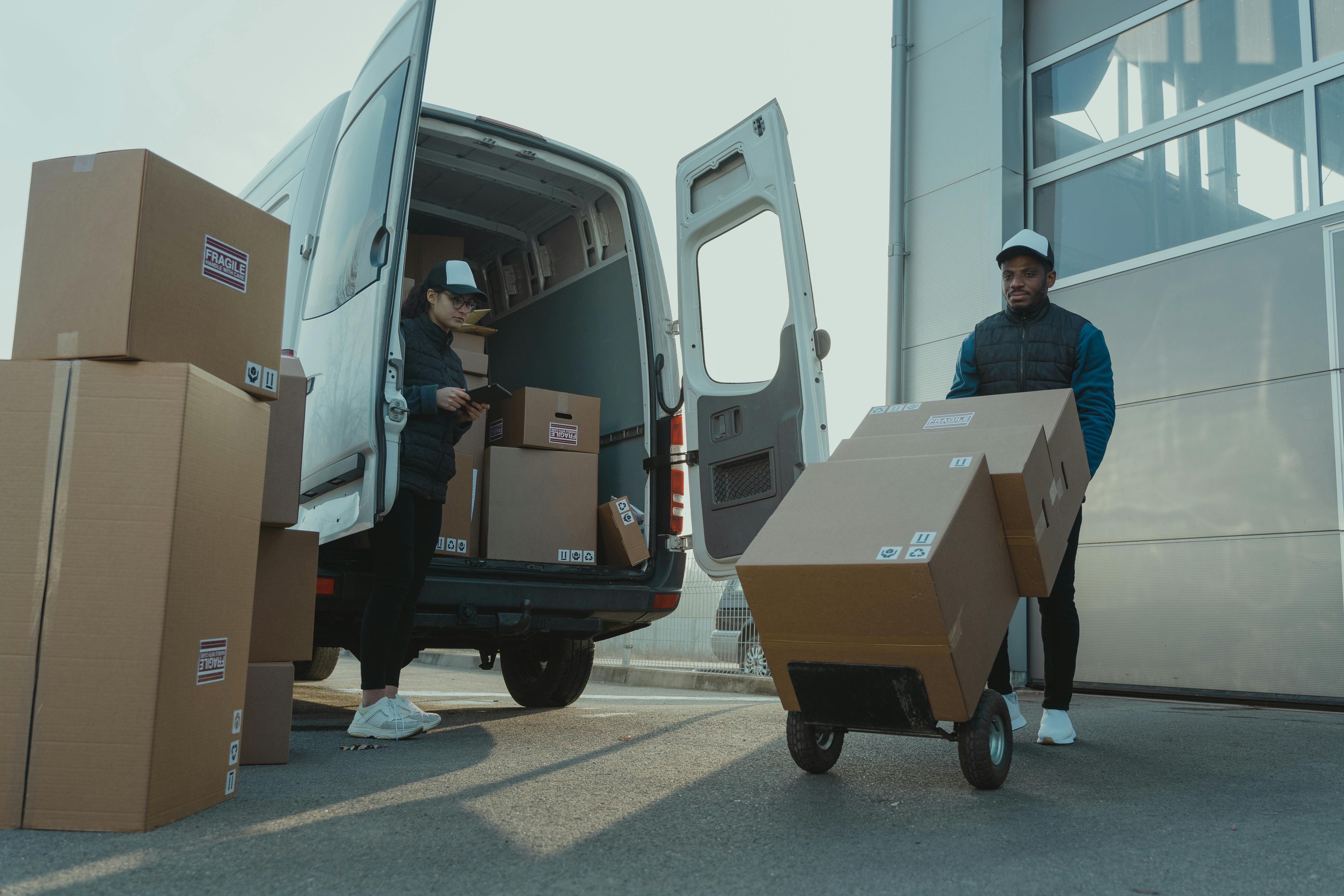
Advantages of Break Bulk
Cargo Flexibility:Break bulk can handle virtually any oversized or irregular cargo with no dimensional constraints like containers or RoRo deck height limitations. Heavy lift cranes routinely manage extremely heavy pieces from 100-300+ tonnes, with specialized vessels handling 1,000+ tonnes. There are no height restrictions—tall items can be stowed on deck without limitation.
Cost-Effective for Specific Cargo:Break bulk is often the most economical method for very large single pieces that would require breaking down for other methods. Irregular shapes that won’t fit RoRo decks or aren’t on wheels or tracks are particularly well-suited for break bulk.
Wide Port Coverage:Break bulk capabilities are more common than RoRo facilities, providing more port options globally. All major Vietnam ports have break bulk capabilities, expanding routing flexibility.
Limitations of Break Bulk
Break bulk loading and discharge are time-consuming—lifting each piece individually takes days versus hours for RoRo. This longer port time can impact project schedules significantly. Cargo stowed on deck faces weather exposure including salt water, rain, and sun, creating increased corrosion risk for steel cargo and machinery that requires protective measures such as tarps, grease, and preservatives.
Handling risk is higher due to multiple lifts during loading, discharge, and potentially intermediate handling. Proper rigging is critical—improper rigging can damage cargo or cause serious accidents. Break bulk requires heavy lift cranes either on the ship or at shore, and shore crane capacity can be a limiting factor at some ports. For lighter cargo or multiple small pieces, break bulk can be more expensive than RoRo when RoRo is suitable.
Understanding RoRo Shipping
What is RoRo?
Roll-on/Roll-off (RoRo) shipping involves cargo rolled on and off vessels on wheels or tracks. Vehicles drive on directly, while non-vehicles are loaded on trailers, SPMTs (self-propelled modular transporters), or roll-trailers and rolled aboard. Vessels feature ramps—stern ramps, side ramps, or internal ramps between decks—and multiple internal decks connected by these ramps to maximize capacity.
Pure Car Carriers (PCC) are designed specifically for automobiles with 6-13 decks and capacity for 2,000-8,000 cars. Pure Car and Truck Carriers (PCTC) accommodate cars plus larger vehicles including trucks, buses, and construction equipment, with some decks featuring higher clearance. RoRo cargo vessels handle general RoRo cargo beyond vehicles, with larger, stronger decks for heavy and oversized cargo.
Loading and Discharge Process
RoRo loading begins with cargo preparation—vehicles are driven or cargo is loaded onto trailers, SPMTs, or roll-trailers. When the RoRo vessel berths, the stern ramp lowers and connects to the shore ramp. Vehicles then drive on or trailers are towed or driven on by tugs, tractors, or SPMTs. Cargo is parked and positioned on the appropriate deck, then secured by lashing to the deck using chains through deck lashing points. The process continues until all cargo is loaded, flowing continuously for very fast operations.
Discharge reverses this process: lashings are removed, vehicles are driven off or trailers are towed off, customs clearance occurs, and transport to final destinations begins. Loading typically takes hours rather than days even for multiple large pieces, with discharge also taking hours. Total port time at each end is 1-2 days—much faster than break bulk.
Advantages of RoRo
Speed:Rolling cargo on and off is dramatically faster than lifting—hours versus days. This reduces project timelines, port costs, and demurrage risk while allowing tighter project schedules.
Protection:Cargo inside the vessel is protected from weather including salt water, rain, and sun. This reduces corrosion risk compared to deck cargo on break bulk vessels and provides better security with cargo inside rather than exposed on deck.
Lower Handling Risk:No lifting is required if cargo is on wheels or tracks or already loaded on a trailer at origin. Fewer handling steps translate to lower damage risk, and rolling operations are simpler than rigging for lifting.
Cost-Effective for Suitable Cargo:RoRo is usually the cheapest method for vehicles compared to containers or break bulk. It’s also cost-effective for multiple smaller pieces versus break bulk lifting each individually.
Limitations of RoRo
RoRo decks have height clearance limits, typically 4-6m on car decks and 6-8m on higher decks. Very tall cargo may not fit, whereas break bulk has no height limitations. Decks also have load limits per square meter—extremely heavy concentrated loads may not be suitable, and very heavy cargo may need special trailers to spread the load across a larger area.
If cargo is not on wheels or tracks, it must be loaded onto trailers or SPMTs, adding complexity and cost. Specialized trailers must be available at origin, and you must either leave trailers with cargo or retrieve them later. RoRo vessels are less common than break bulk and container vessels, offering fewer route options. Schedule constraints may require waiting for the next RoRo sailing versus more frequent break bulk options. Not all ports have RoRo ramps and facilities—while major Vietnam ports have RoRo capabilities, fewer ports offer this compared to break bulk.

Comparative Cost Analysis
Understanding the complete cost structure for each method is essential for making informed decisions. Break bulk costs include ocean freight charged per piece or per revenue ton ($/tonne or $/m³), loading costs for cranes, rigging, and stevedoring at origin ($5,000-50,000+ per piece depending on size), discharge costs for cranes and stevedoring at destination ($5,000-50,000+ per piece), sea-fastening engineering, materials, and labor ($2,000-20,000+ depending on complexity), and insurance typically 0.5-1.5% of cargo value reflecting higher risk.
RoRo costs include ocean freight charged per lane meter ($/lane meter for the length of deck space occupied), typically $50-150 per lane meter depending on route. For example, a 15m long trailer equals 15 lane meters × $80 = $1,200 freight. Loading costs for rolling on are minimal—just tug or driver costs if needed ($500-2,000). Discharge costs for rolling off are similarly low ($500-2,000). Trailer rental or transport if leaving a trailer with cargo adds $3,000-10,000+. Lashing costs are lower than sea-fastening ($500-2,000), and insurance is typically 0.3-1% of cargo value reflecting lower risk.
Example: 100-Tonne Mobile Excavator, Asia-Europe Route
| Cost Component | Break Bulk | RoRo |
|---|---|---|
| Ocean Freight | 100T × $80/T = $8,000 | 12m × $100/lane meter = $1,200 |
| Loading | Crane + stevedoring = $15,000 | Drive on = $1,000 |
| Discharge | Crane + stevedoring = $15,000 | Drive off = $1,000 |
| Sea-fastening/Lashing | $8,000 | $1,000 |
| Trailer | N/A | N/A (drives on tracks) |
| Insurance (1% of $500k) | $5,000 | $5,000 |
| TOTAL | $51,000 | $9,200 |
Analysis:RoRo is approximately 82% cheaper because the excavator can drive onto the RoRo vessel, eliminating crane requirements and dramatically reducing time. RoRo’s speed advantage and no-crane requirement make it highly cost-effective for mobile equipment.
Counter-Example: Large Irregular Steel Structure (150 tonnes, 15m×8m×6m)
| Cost Component | Break Bulk | RoRo |
|---|---|---|
| Ocean Freight | 150T × $80/T = $12,000 | 15m × $100/LM × 2 lanes (8m wide) = $3,000 |
| Loading | Crane + stevedoring = $25,000 | Load on trailer (crane) + roll on = $28,000 |
| Discharge | Crane + stevedoring = $25,000 | Roll off + crane off trailer = $28,000 |
| Sea-fastening/Lashing | $12,000 | $8,000 |
| Trailer | N/A | Rental + return = $15,000 |
| Insurance | $7,500 | $7,500 |
| TOTAL | $81,500 | $90,000 |
Analysis:Break bulk is approximately 9% cheaper because the cargo is awkward—not self-mobile and irregular in shape. RoRo requires loading onto a trailer first using a crane anyway, plus trailer costs, which reduces RoRo’s typical advantages.
Cargo Suitability and Selection Criteria
| Cargo Type | Preferred Method | Rationale |
|---|---|---|
| Cars, light vehicles | RoRo | Drive on, fast, cheap, protected |
| Trucks, buses | RoRo | Drive on, weather protection, fast loading |
| Construction equipment (mobile) | RoRo | Drive/roll on tracks, fast, lower cost, no cranes needed |
| Heavy machinery (not mobile) | Either Method | If fits trailer: RoRo; if very heavy/irregular: break bulk |
| Very tall cargo (>6m height) | Break Bulk | RoRo deck height limited; break bulk no restrictions |
| Extremely heavy (200+ tonnes single piece) | Break Bulk | Heavy lift cranes available; RoRo deck load limits constrain |
| Irregular shape (non-standard trailer) | Break Bulk | Maximum flexibility for unusual configurations |
| Project cargo modules | Break Bulk | Typically heavy, irregular, tall—beyond RoRo constraints |
Key Decision Factors
1. Cargo Mobility:If cargo is self-mobile (vehicles, tracked equipment), RoRo is strongly preferred for speed, cost, and simplicity. For static machinery or structures, consider break bulk or evaluate loading onto trailers for RoRo.
2. Height Constraints:Under 6m, either method is possible. Between 6-8m, RoRo may work on higher decks but requires vessel confirmation. Over 8m requires break bulk due to RoRo height limitations.
3. Weight Considerations:Under 100 tonnes, either method works (check RoRo deck load limits). Between 100-200 tonnes, both are possible though RoRo may need special trailers to spread loads. Over 200 tonnes single piece strongly favors break bulk with heavy lift capabilities.
4. Shape and Configuration:Regular cargo that fits standard trailers enables RoRo. Irregular, wide, or odd shapes favor break bulk with no trailer constraints.
5. Port Capabilities:If both origin and destination have RoRo facilities, RoRo is an option. If either port lacks RoRo, break bulk is required unless transshipment is viable.
6. Timeline Urgency:Tight schedules favor RoRo for faster loading and discharge. Flexible schedules allow either method based on other factors.
7. Weather Sensitivity:Cargo sensitive to corrosion or weather exposure should use RoRo for enclosed protection. Rust-resistant or weather-insensitive cargo can use either method.
8. Quantity:Single large pieces often suit break bulk economically. Multiple pieces may favor RoRo for faster batch loading, particularly if mobile.
Vietnam Port Capabilities
Ho Chi Minh City (Saigon) Ports:Tan Cang (Saigon Port) offers break bulk with heavy lift cranes up to 200 tonnes and RoRo capabilities. Cat Lai is primarily container-focused but has some break bulk capacity. Hiep Phuoc is a modern port with heavy lift and RoRo facilities.
Haiphong Ports:Haiphong Port provides both break bulk and RoRo capabilities. Dinh Vu Port is modern with heavy lift and RoRo services. Lach Huyen is an international deep-water port with heavy lift capacity.
Da Nang Port:Tien Sa Port offers break bulk and RoRo capabilities. Lien Chieu Port focuses on containers with some break bulk capacity.
Other Strategic Ports:Nghi Son (Thanh Hoa) is a heavy industrial port with heavy lift and RoRo serving oil, gas, and power projects. Quy Nhon is break bulk capable, while Vung Tau specializes in oil and gas support with heavy lift capabilities.
Port selection should prioritize proximity to final destination to minimize inland transport costs and complexity. Always verify port capabilities including adequate equipment—crane capacity for break bulk or RoRo ramp clearance. Confirm sufficient laydown area for cargo staging, consider congestion levels that affect berthing and discharge delays, and factor port charges that vary significantly into total cost calculations.
Real-World Case Studies
Case Study 1: Construction Equipment Fleet – RoRo Selected
Cargo:12 pieces of construction equipment including excavators, bulldozers, and cranes weighing 30-80 tonnes each. All equipment was self-mobile, capable of driving or moving on tracks.
Decision Rationale:RoRo was selected because cargo was self-mobile and fit within RoRo height clearance. The route from South Korea to Ho Chi Minh City’s Saigon Port had good RoRo service availability.
Results:Loading took only half a day with equipment driven directly onto the vessel. Ocean freight cost $45,000 using lane meter rates. Discharge also took half a day with equipment driven off. Total project cost was $52,000 with a timeline of just 12 days total (10 days ocean transit plus 1 day loading and 1 day discharge). The operation was successful—fast, cost-effective, with no damage to cargo.
Case Study 2: Power Plant Equipment – Break Bulk Selected
Cargo:Four large pieces including a turbine, generator, transformer, and heat exchanger weighing 120-200 tonnes each, with heights ranging from 6-9m. None of the cargo was self-mobile.
Decision Rationale:Break bulk was selected because cargo was too tall for RoRo (exceeding deck height limits), very heavy, and not mobile. The route from Japan to Haiphong’s Dinh Vu Port utilized a break bulk vessel equipped with 300-tonne heavy lift cranes.
Results:Loading took 3 days for careful lifting, positioning, and sea-fastening. Ocean freight cost $180,000. Discharge also required 3 days. Total project cost was $285,000 including loading, discharge, sea-fastening, and insurance. The timeline was 21 days total (15 days ocean transit plus 3 days loading and 3 days discharge). The project was successful with cargo delivered safely—proper lifting procedures and sea-fastening engineering proved critical to success.
Ready to Ship Your Specialized Cargo?
Choosing between break bulk and RoRo shipping requires careful assessment of cargo characteristics, cost structures, operational implications, port capabilities, and project requirements. By understanding the distinct advantages and limitations of each method, evaluating cargo suitability, comparing total costs, and applying structured decision frameworks, Vietnamese exporters, importers, and project managers can select the optimal ocean freight method that balances cost efficiency, cargo safety, timeline requirements, and operational simplicity.
Expert Guidance:Every specialized cargo movement involves unique technical requirements, cost considerations, operational complexities, and risk factors. Method selection significantly impacts total project cost, timeline, cargo safety, and success probability. Break bulk and RoRo decisions require comprehensive cargo assessment, route analysis, port capability verification, cost modeling, risk evaluation, and insurance planning.
We strongly recommend consulting with experienced specialized freight forwarders, marine cargo specialists, and project logistics consultants for cargo assessment, method evaluation, carrier selection, cost analysis, operational planning, and execution management. Contact our specialized cargo teamto discuss your requirements and connect with qualified break bulk and RoRo shipping specialists.
Related Expert Resources
- Handling Oversized Cargo: A Guide to Project Logistics in Vietnam– Comprehensive project logistics and heavy lift guide
- Air Freight Optimization: Speed vs Cost Analysis– Alternative rapid transport solutions
- Sea Freight Services– Ocean freight services including break bulk and RoRo
- Specialized Cargo Services– Project logistics and specialized handling